 English
 Español
  Português
  русский
  Français
  日本語
日本語  Deutsch
  tiếng Việt
  Italiano
  Nederlands
  Polski
  한국어
한국어  Svenska
  magyar
  Malay
Malay  বাংলা ভাষার
  Dansk
Dansk  Suomi
Suomi  हिन्दी
  Pilipino
  Türkçe
  Gaeilge
  العربية
  Indonesia
  Norsk
Norsk  تمل
تمل  český
český  ελληνικά
  український
  Javanese
  فارسی
فارسی  தமிழ்
தமிழ்  తెలుగు
  नेपाली
  Burmese
  български
  ລາວ
ລາວ  Latine
  Қазақша
  Euskal
  Azərbaycan
  Slovenský jazyk
  Македонски
  Lietuvos
  Eesti Keel
  Română
  Slovenski
  मराठी
मराठी  Srpski језик
  ภาษาไทย


How Much Space Do You Actually Need Inside A Food Trailer Concession Trailer?
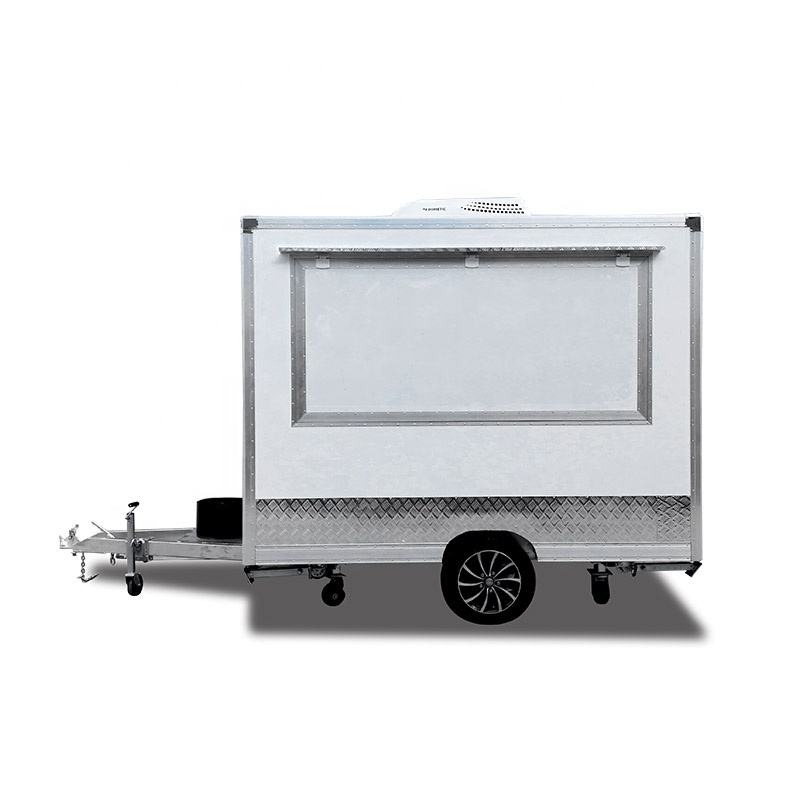
Shandong Fumin Trailer Parts Manufacturing Co., Ltd. offers well-designed Food Trailer Concession Trailer. When launching a mobile food business, a key consideration is figuring out the right amount of interior space. With mobile dining becoming increasingly popular, practical layouts that combine efficiency, comfort and operational flexibility are gaining wide attention across the industry.
The answer is not always "the bigger, the better." A well-designed trailer can often outperform a larger unit if every square meter is used effectively. Understanding how space impacts workflow, equipment placement, food safety, and customer service can help operators make smarter decisions before investing in a mobile kitchen.
Why Interior Space Matters More Than Overall Trailer Size
Many people focus on exterior dimensions when comparing trailers. However, the real value lies inside. A trailer that appears large from the outside may offer less usable workspace due to poor layout planning.
For food service operations, every area must support a specific task:
- Food preparation
- Cooking
- Refrigeration
- Storage
- Cleaning
- Serving customers
When these areas overlap or become crowded, productivity can decrease and staff movement becomes more difficult.
A successful mobile kitchen creates a smooth workflow from ingredient storage to final food delivery. This reduces unnecessary movement and helps maintain consistent service during busy periods.
Understanding the Space Requirements of Different Food Concepts
Not every menu requires the same amount of room. The type of food being prepared directly affects the ideal trailer size.
Small Menu Operations
Businesses serving simple items such as:
- Coffee
- Ice cream
- Beverages
- Snacks
- Desserts
can often operate efficiently in compact trailers.
These concepts require fewer cooking appliances and less refrigerated storage, leaving more open space for movement.
Medium Complexity Menus
Operations offering:
- Burgers
- Sandwiches
- Fried foods
- Street food
typically need additional cooking stations and ingredient storage.
This category often benefits from a mid-sized Food Trailer Concession Trailer that balances mobility with kitchen functionality.
Full-Service Mobile Kitchens
Menus that include:
- Multiple hot dishes
- Grilled foods
- Fried foods
- Specialty cuisine
usually require extensive cooking equipment and preparation areas.
Additional space becomes important for safety, ventilation, and inventory management.
A Practical Example of Space Allocation
The following table shows how interior space may be distributed inside a typical concession trailer measuring approximately 400 cm × 210 cm with an interior height of 200 cm.
| Functional Area | Recommended Space Allocation | Purpose |
| Food Preparation | 20% | Ingredient handling and assembly |
| Cooking Equipment | 30% | Fryers, grills, cookers and griddles |
| Refrigeration & Storage | 20% | Food preservation and inventory |
| Washing Area | 10% | Handwashing and dishwashing |
| Serving Counter | 15% | Customer interaction and order pickup |
| Movement Space | 5% | Safe staff circulation |
This balanced approach helps maximize efficiency while maintaining food safety standards.
Common Space Mistakes That Cause Problems Later
Many new operators focus heavily on equipment selection while overlooking workflow design.
Installing Too Much Equipment
More appliances do not automatically increase productivity.
Overcrowded kitchens can create:
- Limited walking space
- Heat buildup
- Difficult cleaning procedures
- Reduced operational efficiency
Selecting equipment based on actual menu requirements often results in a more functional workspace.
Ignoring Storage Capacity
Food ingredients, packaging materials, utensils, cleaning supplies, and spare items all require dedicated storage.
Insufficient storage can lead to clutter, making the working environment less organized and potentially affecting food preparation efficiency.
Forgetting Ventilation Requirements
Cooking equipment generates heat, smoke, and odors.
Without adequate ventilation systems, interior temperatures can become uncomfortable, particularly during summer events.
Proper exhaust fans and range hood systems are essential for maintaining a productive working environment.
How Modern Trailer Design Maximizes Every Inch
Recent trends in mobile kitchen design focus on smarter space utilization rather than simply increasing trailer dimensions.
Several features of Food Trailer Concession Trailer contribute to improved efficiency:
Multi-Functional Workstations
Preparation counters can also serve as storage compartments.
Foldable shelves and modular cabinets help increase usable space without expanding the trailer footprint.
Vertical Storage Solutions
Walls are often underutilized.
Storage racks mounted on walls allow easy access to supplies while keeping floors clear for movement.
Optimized Equipment Placement
Positioning cooking equipment in sequence can create a natural workflow.
For example:
Storage → Preparation → Cooking → Serving
This arrangement minimizes unnecessary movement and reduces service times.
The Human Factor: Comfortable Working Conditions
Space planning should not focus solely on equipment.
People need room to work safely and comfortably.
Research across commercial kitchens consistently shows that efficient layouts contribute to:
- Faster service
- Better staff coordination
- Reduced fatigue
- Improved operational consistency
A crowded workspace may appear cost-effective initially, but it can limit long-term productivity.
Recommended Working Clearance
Industry professionals generally recommend maintaining enough clearance for staff to pass each other safely without interrupting operations.
This becomes especially important during festivals, sporting events, and other high-volume environments where multiple workers operate simultaneously.
Utility Systems Also Require Space
An often-overlooked aspect of trailer design is the space occupied by utility systems.
Essential components include:
- Fresh water tanks
- Wastewater tanks
- Electrical systems
- Circuit breakers
- Air conditioning units
- Ventilation equipment
- Gas supply systems
These systems support daily operations but also consume valuable interior room.
Planning for them early helps prevent costly modifications later.
Exterior Dimensions Versus Usable Interior Space
A trailer may look large on paper, but usable workspace depends on how efficiently the interior is organized.
For example, a trailer measuring approximately:
| Specification | Measurement |
| Body Length | 400 cm |
| Width | 210 cm |
| Height | 270 cm |
| Interior Height | 200 cm |
| Total Length with Tow Bar | 580 cm |
can comfortably accommodate essential kitchen equipment including fryers, griddles, cookers, sinks, refrigeration systems, storage areas, and serving counters when designed correctly.
The key is not maximizing square footage but maximizing functionality.
Future Trends in Mobile Food Service Design
As the mobile food industry evolves, space optimization continues to be a major design focus.
Emerging trends include:
- Modular kitchen layouts
- Smart storage systems
- Lightweight materials
- Energy-efficient appliances
- Improved ventilation technologies
- Flexible serving configurations
These developments allow operators to accomplish more within the same footprint while maintaining comfort and efficiency.
Final Thoughts
Determining the ideal amount of interior space is less about choosing the largest trailer available and more about understanding operational needs. A carefully planned Food Trailer Concession Trailer should support smooth workflows, safe food handling, efficient storage, and comfortable working conditions. By focusing on functionality rather than size alone, operators can create mobile kitchens that perform effectively in a wide range of environments. The Food Trailer solutions developed by Shandong Fumin Trailer Parts Manufacturing Co., Ltd. reflect this industry-wide emphasis on practical design, efficient space utilization, and reliable mobile food service operations.
Send Inquiry


X
We use cookies to offer you a better browsing experience, analyze site traffic and personalize content. By using this site, you agree to our use of cookies.
Privacy Policy