 English
 Español
  Português
  русский
  Français
  日本語
日本語  Deutsch
  tiếng Việt
  Italiano
  Nederlands
  Polski
  한국어
한국어  Svenska
  magyar
  Malay
Malay  বাংলা ভাষার
  Dansk
Dansk  Suomi
Suomi  हिन्दी
  Pilipino
  Türkçe
  Gaeilge
  العربية
  Indonesia
  Norsk
Norsk  تمل
تمل  český
český  ελληνικά
  український
  Javanese
  فارسی
فارسی  தமிழ்
தமிழ்  తెలుగు
  नेपाली
  Burmese
  български
  ລາວ
ລາວ  Latine
  Қазақша
  Euskal
  Azərbaycan
  Slovenský jazyk
  Македонски
  Lietuvos
  Eesti Keel
  Română
  Slovenski
  मराठी
मराठी  Srpski језик
  ภาษาไทย


How Do You Choose the Right Spare Parts Axle for Reliable Trailer Performance?
Abstract
A trailer doesn’t usually fail with fireworks—it fails quietly: uneven tire wear, mysterious vibration, longer stopping distances, or a hub that runs hotter than it should. In many of these cases, the real culprit is a worn or mismatched Spare Parts Axle. This article breaks down the practical decisions that matter when replacing or upgrading an axle: correct fitment, load rating, brake and hub compatibility, material quality, corrosion resistance, and what to ask a supplier before you place an order. You’ll also get a straightforward checklist, a comparison table, and a troubleshooting guide so you can choose with confidence, reduce downtime, and keep your trailer safe and predictable on the road.
Contents
- What Makes Axle Replacement So Frustrating?
- When Should You Replace an Axle Instead of “Nursing It”?
- What Fitment Details Must Match Every Time?
- How Do Load Rating and Real-World Use Interact?
- Which Brake and Hub Choices Avoid Costly Rework?
- What Material and Manufacturing Clues Reveal Long-Term Quality?
- Selection Table: Which Axle Setup Fits Which Job?
- What Installation and Maintenance Habits Extend Axle Life?
- What Should You Ask a Supplier Before Buying?
- FAQ
- Final Notes and Next Step
Outline
- Identify the failure symptoms that truly point to an axle issue (not just “bad tires”).
- Confirm fitment with measurable specs: track width, mounting interface, bolt pattern, and brake type.
- Choose a load rating that matches your real usage (including shock loads and road conditions).
- Align hubs, bearings, seals, and brakes so you don’t pay twice in labor and shipping.
- Evaluate material quality and corrosion protection for your operating environment.
- Use a simple supplier checklist to prevent wrong parts, delays, and warranty headaches.
What Makes Axle Replacement So Frustrating?
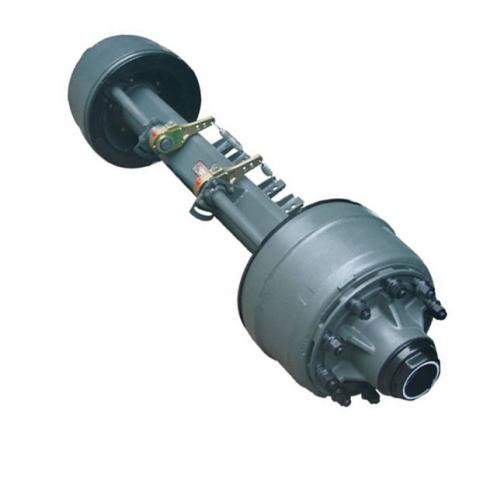
Most buyers don’t struggle because they can’t find an axle—they struggle because they can’t be sure it’s the right axle. The pain usually shows up in four ways: wasted time, repeat labor, inconsistent performance, and safety risk. A Spare Parts Axle is the kind of component that looks “close enough” until your trailer is loaded, your brakes are warm, and the road is less than perfect.
Common customer headaches include:
- Compatibility confusion: Similar axles can differ in track width, spring seat spacing, hub face length, spindle size, or brake mounts.
- Downtime pressure: A trailer off the road can mean missed deliveries, idle equipment, and extra rental costs.
- Hidden costs: An axle that “fits” but doesn’t match your hubs/brakes can trigger new parts, new bearings, new drums, and more labor.
- Premature wear: Misalignment, overload, or low-quality machining often shows up as uneven tire wear, heat, noise, or vibration.
The good news: you don’t need to be an engineer to buy correctly. You just need a clean process and the right questions.
When Should You Replace an Axle Instead of “Nursing It”?
If a trailer is a working asset, an axle is a safety-critical part that earns you money only when it’s dependable. Replacing early can feel expensive—until you compare it with tire damage, roadside breakdowns, or brake failures.
Replace or rebuild when you notice:
- Persistent vibration that remains after balancing tires and checking wheels.
- Uneven tire wear (cupping, scalloping, or rapid inner/outer edge wear) that suggests alignment or bearing issues.
- Overheating hubs or grease that looks burned or contaminated.
- Noise under load (grinding, growling, or rhythmic knocking).
- Brake inconsistency (pulling, fade, or weak response), especially if hardware and adjustment are already correct.
- Visible bending, cracks, or damaged welds on the axle beam or mounting points.
If your trailer is mission-critical, keeping a verified Spare Parts Axle plan (or even a spare axle assembly) can turn a multi-day crisis into a same-day repair.
What Fitment Details Must Match Every Time?
Fitment is where most “wrong part” stories begin. If you only match one dimension (like “it’s a 5,200-lb axle”), you’re gambling. A reliable order starts with measurable specs and clear photos.
Minimum specs you should confirm:
- Hub face to hub face (HF): The distance between the wheel mounting surfaces. This affects track width and tire clearance.
- Spring center (SC) / mounting centers: The spacing of spring seats or mounting brackets. Wrong spacing forces unsafe modifications.
- Axle type: straight, drop, torsion, or specialty configuration (each behaves differently under load).
- Spindle size and bearing set: Inner/outer bearings must match your hubs and intended load.
- Bolt pattern (PCD): Common patterns look similar but are not interchangeable.
Practical tip: If you’re not sure, measure twice and photograph three angles: the spindle end, the mounting area, and the brake flange. A supplier can often confirm details faster with images than with guesswork.
How Do Load Rating and Real-World Use Interact?
Load rating isn’t just a label—it’s a promise that only holds if your usage matches the test assumptions. A trailer carrying dense cargo on rough roads experiences impacts and side loads that can exceed “static” ratings.
To avoid under-spec’ing:
- Include cargo reality: peak loads, not “average.”
- Factor in road conditions: potholes, curbs, gravel sites, ramps, and off-road sections add shock loads.
- Watch speed and heat: long highway runs generate hub and brake heat; weak components fail faster when hot.
- Account for distribution: uneven loading can punish a single axle even if total weight seems “fine.”
If you frequently work near your limit, selecting a slightly higher-rated Spare Parts Axle can be cheaper than repeatedly replacing bearings, tires, and brake parts.
Which Brake and Hub Choices Avoid Costly Rework?
Many axle purchases go wrong because the axle and braking/hub components are treated as separate decisions. They shouldn’t be. The axle, hub, bearings, seals, brake flange, and brake type need to agree—otherwise you’ll end up re-ordering parts or machining components after the fact.
Key alignment points:
- Brake mounting flange: Verify the bolt pattern and flange offset for your brake assemblies.
- Brake type: electric brakes vs. hydraulic/drum vs. disc conversion—each changes hardware needs.
- Hub and drum compatibility: Match drum size, stud count, and bearing sets.
- Seal and grease system: Correct seal size prevents leaks that destroy bearings quickly.
If your goal is faster repairs, consider ordering an axle as a complete assembly (axle + hubs + brakes) so components arrive already matched.
What Material and Manufacturing Clues Reveal Long-Term Quality?
Two axles can share the same dimensions and still behave very differently over time. The difference is usually in material selection, machining accuracy, weld quality, and corrosion protection.
Look for these quality signals:
- Consistent machining: Clean bearing journals and accurate spindle geometry reduce heat and wear.
- Strong weld integrity: Spring seats and brackets should be evenly welded with no obvious porosity or cracking.
- Protective finishing: Coatings help in humid, coastal, or winter-salt environments.
- Traceable specs: Clear part identification, documentation, and repeatable build standards matter for fleets.
If you’re sourcing from a dedicated manufacturer like Shandong Fumin Trailer Parts Manufacturing Co., Ltd., ask for the axle configuration options that match your application (beam type, brake mounts, hub options, and protective finishes) so you’re not forced into “close enough.”
Selection Table: Which Axle Setup Fits Which Job?
Use the table below as a starting point. It doesn’t replace measurement, but it does help align the axle choice with your operating reality.
| Operating Scenario | Typical Pain Point | Recommended Axle Direction | Why It Helps |
|---|---|---|---|
| Highway freight, steady loads | Heat buildup in hubs | Correct-rated axle with matched bearings/seals | Reduces overheating and extends bearing life |
| Construction sites, rough access roads | Shock loads, bent components | Higher margin load rating + robust mounting | Handles impacts better, lowers failure risk |
| Coastal or winter-salt environments | Rust, seized hardware | Corrosion-resistant finishing and protected hardware | Slows corrosion and eases maintenance |
| Frequent braking, hilly routes | Brake fade, inconsistent stopping | Brake-matched axle flange + quality brake setup | Improves braking response and stability |
| Fleet operations with multiple trailer models | Wrong parts ordered | Standardized specs + documented fitment records | Reduces ordering mistakes and downtime |
What Installation and Maintenance Habits Extend Axle Life?
Even the best Spare Parts Axle will fail early if installed or maintained poorly. Most early failures trace back to alignment, torque, lubrication, or neglected seals.
Best practices that pay off quickly:
- Torque correctly: Over-tightened lug nuts and fasteners can warp drums or stress studs.
- Set bearings properly: Too tight causes heat; too loose causes wobble and rapid wear.
- Check alignment after installation: Misalignment shows up as tire wear and instability at speed.
- Inspect seals and grease condition: Contaminated grease is an early warning sign—don’t ignore it.
- Re-check after break-in: A short follow-up inspection after initial miles catches settling issues.
If your team does frequent swaps, document the successful axle specs for each trailer model. That single step can reduce repeat errors dramatically.
What Should You Ask a Supplier Before Buying?
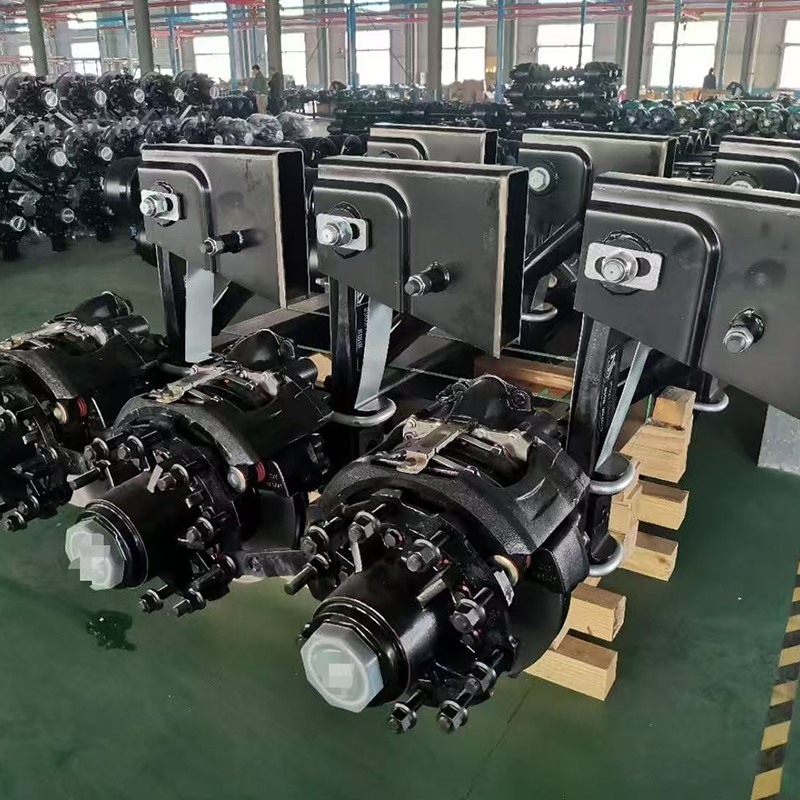
A good supplier doesn’t just “sell you an axle”—they help you avoid the expensive mistakes that come from incomplete specs. Before you place the order, use this quick checklist.
- Can you confirm HF and SC measurements from my numbers/photos?
- Which bearing set and seal size does this spindle require?
- Does the axle include brake flanges, spring seats, or mounting brackets, and are they positioned to spec?
- Which hub and bolt pattern options are available for this configuration?
- What protective finishing is recommended for my environment?
- How is the axle packaged to protect spindle ends during shipping?
- What information is needed for warranty support if a defect appears?
A supplier who answers these clearly is usually the supplier who keeps your trailer on the road.
FAQ
Q1: Can I buy a Spare Parts Axle using only the trailer’s load rating?
A: It’s risky. Load rating helps narrow options, but fitment (HF, SC, spindle/bearing size, brake mounts, bolt pattern) is what prevents wrong parts and repeat labor.
Q2: What’s the fastest way to confirm compatibility if I’m unsure?
A: Measure HF and SC, identify bolt pattern, and take clear photos of the spindle end and brake flange area. Those details often allow a supplier to confirm the correct configuration quickly.
Q3: Should I replace just the axle beam or the whole assembly?
A: If hubs, brakes, bearings, and seals are already worn or mismatched, a complete assembly can reduce downtime and avoid “parts chasing.” If your existing components are in excellent condition and fully compatible, a beam-only replacement may be practical.
Q4: Why do my hubs overheat after an axle replacement?
A: Common causes include incorrect bearing preload, mismatched bearings/seals, contaminated grease, or a spindle/bearing interface that isn’t correctly matched. Overheating should be addressed immediately to prevent bearing failure.
Q5: How can I reduce wrong orders across a fleet?
A: Standardize specs where possible and maintain a fitment record per trailer model: HF, SC, spindle/bearing set, brake type, hub pattern, and preferred finishing. It turns future purchases into repeatable, low-risk orders.
Final Notes and Next Step
Choosing a Spare Parts Axle is less about finding “an axle that fits” and more about building a match that stays stable under load, heat, and time. If you measure the right points, align hubs and brakes as a system, and confirm material/finishing for your environment, you’ll cut downtime and protect the parts around the axle—tires, bearings, brakes, and suspension.
If you want to avoid guesswork, share your axle measurements (HF and SC), bolt pattern, brake type, and a few photos. Shandong Fumin Trailer Parts Manufacturing Co., Ltd. can help you identify a configuration that matches your trailer’s working conditions and keeps performance consistent. Ready to get the right setup the first time? Contact us today and let’s turn your axle replacement into a clean, one-and-done repair.
Send Inquiry


X
We use cookies to offer you a better browsing experience, analyze site traffic and personalize content. By using this site, you agree to our use of cookies.
Privacy Policy