 English
 Español
  Português
  русский
  Français
  日本語
日本語  Deutsch
  tiếng Việt
  Italiano
  Nederlands
  Polski
  한국어
한국어  Svenska
  magyar
  Malay
Malay  বাংলা ভাষার
  Dansk
Dansk  Suomi
Suomi  हिन्दी
  Pilipino
  Türkçe
  Gaeilge
  العربية
  Indonesia
  Norsk
Norsk  تمل
تمل  český
český  ελληνικά
  український
  Javanese
  فارسی
فارسی  தமிழ்
தமிழ்  తెలుగు
  नेपाली
  Burmese
  български
  ລາວ
ລາວ  Latine
  Қазақша
  Euskal
  Azərbaycan
  Slovenský jazyk
  Македонски
  Lietuvos
  Eesti Keel
  Română
  Slovenski
  मराठी
मराठी  Srpski језик
  ภาษาไทย


What Is The Difference Between The CA4180P66K25E6 4X2 And The CA4180P66K25E6 6X4?
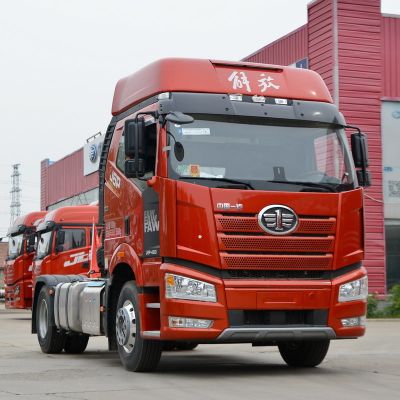
Shandong Fumin Trailer Parts Manufacturing Co., Ltd. introduces the CA4180P66K25E6 Drive form: 4X2 comparison to help understand how different drive structures influence heavy-duty truck performance, transportation efficiency, and application choices.
In modern freight transportation, the drive form of a tractor truck plays an important role in determining operating efficiency, road adaptability, and long-term maintenance performance. Although 4X2 and 6X4 trucks may appear similar from the outside, their chassis structures create significant differences in traction capability, weight distribution, fuel consumption, and working conditions.
The selection between these two configurations is not simply about choosing a larger or smaller vehicle. It depends on the transportation environment, cargo type, route conditions, and the balance between efficiency and carrying requirements.
Understanding The Basic Difference Between 4X2 And 6X4 Drive Forms
The terms 4X2 and 6X4 represent the truck's wheel arrangement and driving axle structure.
A 4X2 tractor truck contains four wheel positions, with two wheels powered by a single rear driving axle. This structure reduces mechanical complexity and vehicle weight, making it suitable for highway transportation, regional logistics, and routes with stable road conditions.
A 6X4 tractor truck includes six wheel positions, with four driven wheels connected through two rear driving axles. The additional drive axle improves road grip and weight distribution, especially when transporting heavier loads or operating in challenging environments.
The fundamental difference lies in how the vehicle transfers engine power to the road surface.
| Comparison Category | 4X2 Drive Form | 6X4 Drive Form |
| Wheel Arrangement | Four wheel positions with one driving axle | Six wheel positions with two driving axles |
| Driving Wheels | Two driven wheels | Four driven wheels |
| Chassis Weight | Lower overall weight | Higher structural weight |
| Fuel Efficiency | Better for long-distance highway operation | Higher fuel demand due to additional components |
| Traction Performance | Suitable for normal road conditions | Better performance on difficult roads |
| Maintenance Structure | Simpler drivetrain system | More complex axle and suspension structure |
| Typical Application | Logistics, containers, regional freight | Heavy loads, construction, harsh environments |
Why 4X2 Configuration Is Widely Used In Long-Distance Transportation
Fuel efficiency has become one of the most important considerations in commercial transportation. A lighter truck generally requires less energy to move, especially during long highway journeys.
The CA4180P66K25E6 Drive form: 4X2 is developed around efficiency, stability, and practical freight performance. Its single rear drive axle structure reduces unnecessary mechanical weight while maintaining sufficient pulling capability for common semi-trailer applications.
Equipped with the Chai CA6DM2-46E66 inline six-cylinder diesel engine, the truck delivers 460 horsepower and 341kW output power. The 11.05L displacement provides strong torque output, allowing stable performance during highway transportation and regional distribution.
The FAW Jiefang CA12TAX230 manual transmission with 12 forward gears and 2 reverse gears helps optimize power delivery under different driving conditions. The multi-speed gearbox allows drivers to select suitable gears according to road conditions, vehicle load, and speed requirements.
For transportation scenarios such as:
- Container freight between ports and inland terminals
- Expressway logistics operations
- Standard semi-trailer transportation
- Medium and long-distance distribution routes
the 4X2 structure offers an effective balance between operating efficiency and transportation capability.
How The 6X4 Configuration Improves Heavy Load Performance
While 4X2 trucks focus on efficiency, 6X4 models are designed for situations where additional traction and load support are required.
The second rear driving axle provides more contact between the vehicle and the road surface. This improves stability when transporting heavy cargo, climbing slopes, or driving on uneven roads.
The advantages of a 6X4 configuration are particularly noticeable in industries involving:
- Construction material transportation
- Mining-related logistics
- Heavy machinery transportation
- Rural or mountainous routes
- High-load working environments
However, the additional axle structure also increases vehicle weight and mechanical complexity. This means a 6X4 truck may consume more fuel during normal highway operation compared with a similar 4X2 model.
Therefore, the best configuration depends on the actual transportation environment rather than simply selecting a vehicle with greater capacity.
Power System And Chassis Structure Differences
Many people assume that engine power is the main factor determining truck performance. However, the chassis design decides how effectively that power is transferred.
A 4X2 truck sends engine torque through one rear axle. This reduces power transmission loss and decreases the number of components requiring maintenance.
A 6X4 truck distributes torque through two rear axles. This improves traction but also requires additional differential components, axle assemblies, and suspension structures.
| Technical Area | 4X2 Configuration | 6X4 Configuration |
| Torque Distribution | Concentrated through one rear axle | Distributed through two rear axles |
| Mechanical Structure | More simplified | More complex |
| Vehicle Weight | Lower | Higher |
| Fuel Economy | Strong advantage on highways | Designed for heavy-duty conditions |
| Maintenance Frequency | Generally easier service management | Requires inspection of additional components |
For fleet operations focused on fuel savings and route efficiency, a 4X2 structure often provides practical advantages. For operations requiring maximum traction, a 6X4 configuration may be more suitable.
Weight Optimization In The CA4180P66K25E6 4X2 Design
Weight control is becoming increasingly important in modern logistics. Every reduction in unnecessary vehicle weight can improve transportation efficiency and increase available payload capacity.
The CA4180P66K25E6 Drive form: 4X2 adopts lightweight components while maintaining structural strength. The aluminum alloy transmission shell and aluminum alloy fuel tanks help reduce overall vehicle weight while improving heat dissipation performance.
The dual fuel tank system includes 500L + 500L capacity, providing a total fuel volume of 1000 liters. This supports long-distance operation while reducing the need for frequent refueling.
The truck has a curb weight of approximately 6.805 tons, a total vehicle mass rating of 18 tons, and a total traction mass capability of 35 tons.
This weight management approach allows the vehicle to achieve a combination of:
- Reduced fuel consumption
- Extended driving range
- Improved payload efficiency
- Better highway operating economics
Road Conditions Determine The Right Drive Choice
Different transportation environments create different requirements. A truck that performs well on highways may not always be the best choice for construction sites or rough terrain.
For example, a logistics company transporting containers between major cities may prioritize fuel economy and driving comfort. In this situation, a 4X2 tractor can provide sufficient performance with lower operating costs.
On the other hand, vehicles working in mining areas or carrying extremely heavy materials may require the additional traction provided by a 6X4 system.
Choosing the correct drive form means matching vehicle design with actual working conditions.
Application Advantages Of The CA4180P66K25E6 4X2
The CA4180P66K25E6 Drive form: 4X2 is suitable for various commercial transportation scenarios where efficiency, reliability, and operational flexibility are important.
Efficient Highway Freight Performance
The lightweight chassis structure helps maintain lower fuel consumption during long-distance transportation. The aerodynamic cab design and optimized power system support stable cruising performance.
Reliable Semi-Trailer Compatibility
With a 50# saddle seat, Φ430 clutch system, and reinforced chassis components, the truck is designed to work with common semi-trailer transportation systems.
Stable Driving Control
The vehicle includes advanced safety features such as a lane keeping system, brake replacement alarm, power steering assistance, and an LCD instrument dashboard.
These systems help improve driving safety and provide clearer information during daily operation.
Manufacturing Capability And Quality Control Background
Shandong Fumin Trailer Parts Manufacturing Co., Ltd. is located in Shandong Liangshan Boxing Industrial Park, one of China's important trailer production areas.
The company integrates research, design, production, and inspection processes, focusing on trailer axle systems and related heavy-duty transportation components.
With advanced CNC processing equipment, standardized production lines, and an annual capacity of 150,000 semi-trailer axle assemblies, Fumin maintains consistent manufacturing procedures for different application requirements.
| Inspection Process | Purpose |
| Engineering sample verification | Confirm technical specifications before production |
| CNC machining inspection | Maintain dimensional accuracy |
| Axle and chassis checking | Ensure structural reliability |
| Brake performance testing | Verify operational safety |
| Final inspection | Confirm product consistency before delivery |
These production practices support stable performance for transportation equipment used in different regions and operating environments.
Future Development Trends Of Heavy Truck Drive Systems
The commercial vehicle industry is moving toward more efficient, intelligent, and application-focused solutions.
Rather than using one configuration for all transportation tasks, modern logistics operations increasingly select vehicles according to specific routes and cargo requirements.
The 4X2 structure continues to play an important role in highway freight because of its efficiency advantages, while 6X4 models remain valuable for heavy-duty and challenging applications.
The future of transportation will depend on finding the right balance between power, efficiency, durability, and operating costs.
Conclusion
The difference between 4X2 and 6X4 drive forms comes from their different design priorities. A 4X2 truck focuses on fuel efficiency, lower weight, and flexible highway operation, while a 6X4 truck emphasizes stronger traction and heavy-load capability.
For transportation environments requiring efficient long-distance freight performance, the CA4180P66K25E6 Drive form: 4X2 provides a practical solution through optimized power, lightweight structure, and reliable chassis design.
With its experience in trailer-related transportation components and engineering development, Shandong Fumin Trailer Parts Manufacturing Co., Ltd. continues to support the evolution of commercial vehicle solutions through products such as the CA4180P66K25E6 Drive form: 4X2.
Send Inquiry


X
We use cookies to offer you a better browsing experience, analyze site traffic and personalize content. By using this site, you agree to our use of cookies.
Privacy Policy