 English
 Español
  Português
  русский
  Français
  日本語
日本語  Deutsch
  tiếng Việt
  Italiano
  Nederlands
  Polski
  한국어
한국어  Svenska
  magyar
  Malay
Malay  বাংলা ভাষার
  Dansk
Dansk  Suomi
Suomi  हिन्दी
  Pilipino
  Türkçe
  Gaeilge
  العربية
  Indonesia
  Norsk
Norsk  تمل
تمل  český
český  ελληνικά
  український
  Javanese
  فارسی
فارسی  தமிழ்
தமிழ்  తెలుగు
  नेपाली
  Burmese
  български
  ລາວ
ລາວ  Latine
  Қазақша
  Euskal
  Azərbaycan
  Slovenský jazyk
  Македонски
  Lietuvos
  Eesti Keel
  Română
  Slovenski
  मराठी
मराठी  Srpski језик
  ภาษาไทย


What Is The Typical Tolerances Achievable With Different Casting Methods?
Shandong Fumin Trailer Parts Manufacturing Co., Ltd. operates within the precision engineering field where Casting Parts tolerance control has become a key reference point for dimensional stability and performance consistency in industrial applications. Across modern manufacturing environments, tolerance levels are no longer treated as simple numeric limits but as a reflection of how well different casting methods can control shrinkage, cooling behavior, and mold precision during solidification.
In practical terms, even small variations in tolerance can influence assembly fit, mechanical load distribution, and long-term wear behavior. This makes casting accuracy an essential topic for industries relying on high-precision components such as automotive systems, machinery structures, and transport equipment.
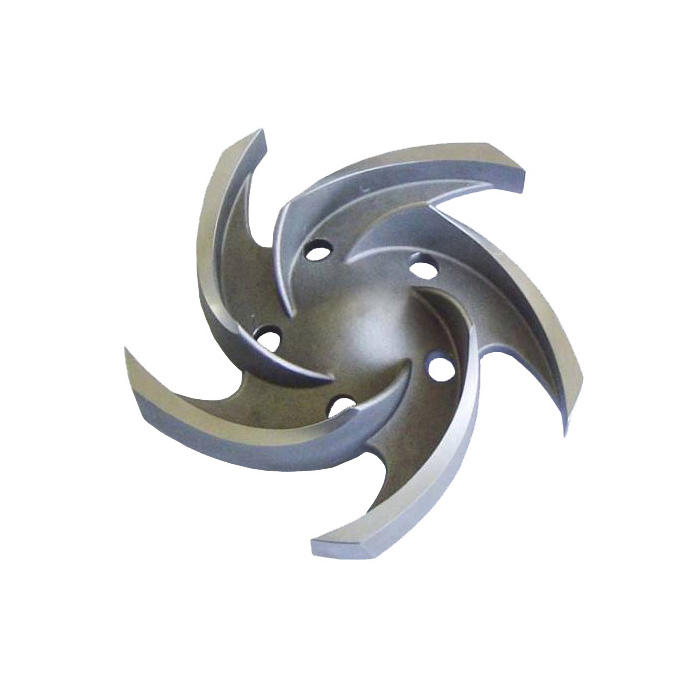
Understanding Tolerance in Casting Processes
In Casting Parts production, tolerance refers to the allowable deviation between the designed dimension and the final manufactured dimension. Since molten materials shrink and react differently during cooling, each casting method produces its own characteristic tolerance range.
Unlike machining processes, casting is influenced by multiple physical variables such as mold material, cooling rate, alloy composition, and cavity geometry. These factors create predictable but distinct tolerance patterns across different casting methods.
Core factors affecting tolerance include:
- Material shrinkage rate during cooling
- Mold accuracy and surface quality
- Pouring temperature stability
- Solidification time and cooling gradient
- Post-casting finishing requirements
Typical Tolerances Across Casting Methods
Different casting techniques offer different levels of dimensional control. The table below summarizes commonly observed tolerance ranges in industrial Casting Parts applications:
| Casting Method | Typical Tolerance Range | Surface Finish Quality | Dimensional Stability |
| Sand Casting | ±0.5 mm to ±2.0 mm | Moderate | Medium |
| Investment Casting | ±0.05 mm to ±0.3 mm | High | High |
| Die Casting | ±0.02 mm to ±0.2 mm | Very High | Very High |
| Gravity Casting | ±0.3 mm to ±1.0 mm | Medium-High | Medium |
| Lost Foam Casting | ±0.2 mm to ±1.5 mm | Medium | Medium |
This comparison shows that process selection has a direct influence on final dimensional precision, especially when components require tight assembly fits.
Sand Casting and Its Practical Tolerance Behavior
Sand casting remains one of the most widely used methods in Casting Parts production due to its flexibility and cost efficiency. However, it also presents wider tolerance ranges compared to more advanced processes.
Typical characteristics include:
- Higher dimensional variation due to sand mold compressibility
- Slight surface roughness requiring post-processing
- Suitable for large and heavy components
- Flexible design adaptation for complex shapes
In many industrial applications, sand casting is chosen when absolute precision is less critical than structural strength and production flexibility.
Investment Casting and Precision Control
Investment casting, often referred to as precision casting, is widely recognized for its tight tolerance capability in Casting Parts manufacturing. The wax pattern process allows for highly accurate replication of fine details, making it suitable for components requiring complex geometry and minimal post-machining.
Key advantages:
- Extremely low dimensional deviation
- Smooth surface finish reducing secondary machining
- High repeatability for complex shapes
- Stable performance across small and medium-sized parts
This method is often selected when assembly precision and surface integrity are critical design requirements.
Die Casting and High-Volume Accuracy Stability
Die casting is one of the most consistent processes in terms of dimensional control. Because molten material is injected into a rigid metal mold under high pressure, Casting Parts produced through this method often show excellent repeatability.
Typical performance features:
- Narrow tolerance range with minimal variation
- High production consistency across batches
- Smooth surface finish suitable for mechanical assemblies
- Fast cooling leading to stable crystallization structure
However, die casting is generally more suitable for non-ferrous metals such as aluminum, zinc, and magnesium alloys.
Process Selection and Engineering Trade-Offs
Choosing a casting method is not only about achieving the tightest tolerance. In real engineering applications, the decision depends on balancing cost, complexity, mechanical performance, and production scale.
Comparison of process priorities:
| Requirement Priority | Recommended Casting Method |
| Ultra-high precision | Investment Casting |
| High-volume stability | Die Casting |
| Large structural components | Sand Casting |
| Moderate complexity with flexibility | Gravity Casting |
This structured approach ensures that Casting Parts are produced in alignment with functional requirements rather than only dimensional targets.
Dimensional Stability and Long-Term Performance
Tolerance does not only affect initial assembly but also long-term behavior under load. Components with inconsistent dimensional accuracy may experience uneven stress distribution, which can accelerate wear or reduce structural stability.
Common long-term effects of poor tolerance control:
- Uneven load concentration in joint areas
- Increased vibration during mechanical operation
- Accelerated surface fatigue under cyclic stress
- Misalignment in assembled systems
These effects highlight why tolerance control is treated as a foundational quality factor in casting engineering.
Role of Material Behavior in Tolerance Outcomes
Different metals and alloys behave differently during solidification. For example, aluminum alloys typically shrink more predictably, while cast iron may exhibit more complex internal stress patterns.
Material influence factors:
- Thermal expansion coefficient
- Cooling contraction rate
- Grain structure formation during solidification
- Alloy composition stability
These variables must be considered when selecting casting methods for precision-critical applications.
Modern Improvements in Casting Accuracy
Advancements in CNC mold fabrication, simulation-based mold design, and temperature-controlled pouring systems have significantly improved tolerance consistency in Casting Parts production.
Simulation tools now allow engineers to predict shrinkage behavior before production, reducing dimensional deviations and improving repeatability across batches.
Field Application Observations
In real-world industrial environments, components produced through different casting methods often show noticeable differences in fitting accuracy during assembly. Investment and die casting components tend to require less secondary adjustment, while sand-cast parts may need additional finishing depending on application requirements.
These differences are especially visible in machinery systems where multiple components must align precisely under dynamic load conditions.
Conclusion
Tolerance levels in Casting Parts vary significantly across different casting methods, with die casting and investment casting offering the highest dimensional precision, while sand casting provides greater flexibility for larger structural components. The selection of a casting process ultimately depends on balancing precision requirements, material behavior, and application conditions.
Within this framework, Shandong Fumin Trailer Parts Manufacturing Co., Ltd. applies advanced casting process control and precision machining systems to support stable dimensional performance across complex industrial components, ensuring that casting-based parts maintain reliable geometric consistency in practical engineering environments.
Send Inquiry


X
We use cookies to offer you a better browsing experience, analyze site traffic and personalize content. By using this site, you agree to our use of cookies.
Privacy Policy